


Last Harvest (Director: Hui Wang)
Director
Hui WangProducers
Jun Zhang Hui WangSubjects
Asian Studies Aging Biography Environment Mandarin Politics Social Sciences Sociology World History- Release Date 2015
- Running Time 78 minutes
- Closed Captions Yes
- Availability Worldwide except Africa
- Regular price
- $275.00
- Regular price
-
- Sale price
- $275.00
- Unit price
- per
License Definitions
License Definitions
Institutions: Purchase at this price level if you are from a university, college, school board, school district, government agency, business or association. Note: Price does not include inter-library loan rights.
Community: Purchase at this price level if you are from a single K-12 School, registered not-for-profit, community organization, public library. Note: Price does not include right to circulate DVD/program to other schools within district.
DSL Terms
DSL Terms
DSL stands for Digital Site License and permits the buyer of the license (or Licensee) to host the film on a private, password-protected, closed server for the term of the license for educational use. If your institution does not have a server or a private third party hosting platform or you are looking into a license for curated one-time events or fixed term exhibitions, please contact us.
See below for more information about DSL terms of use. Upon order placement, our staff will contact you within 3 business days to arrange digital file delivery.
Book a Screening
Book a Screening
Couldn't load pickup availability
Share
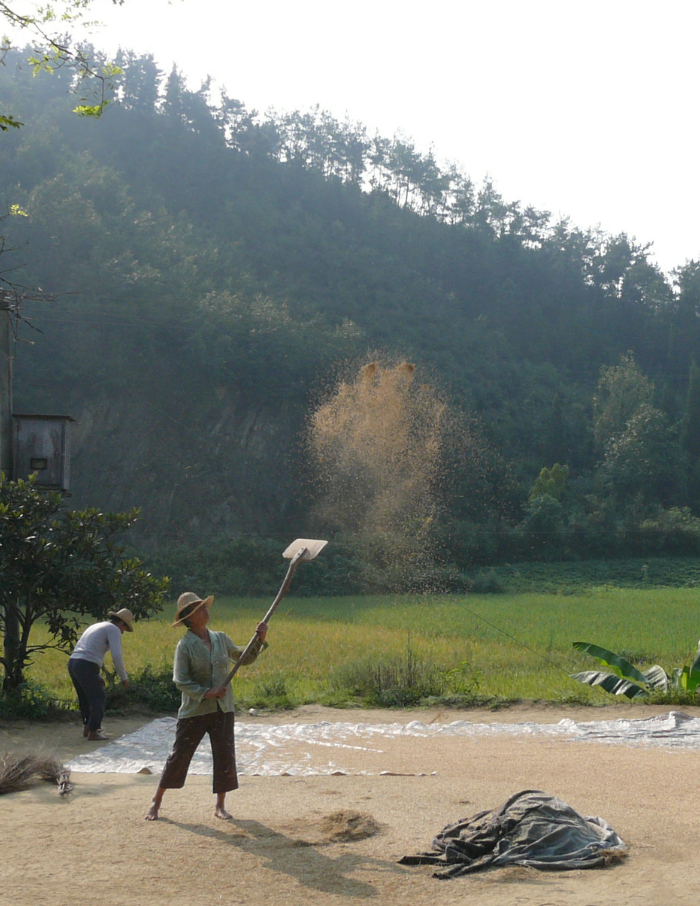
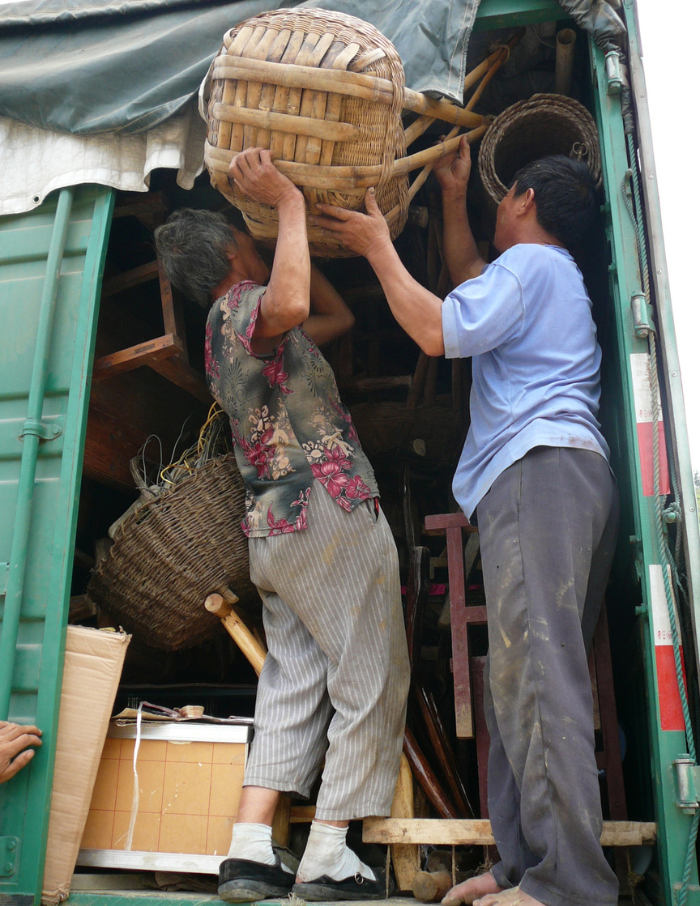
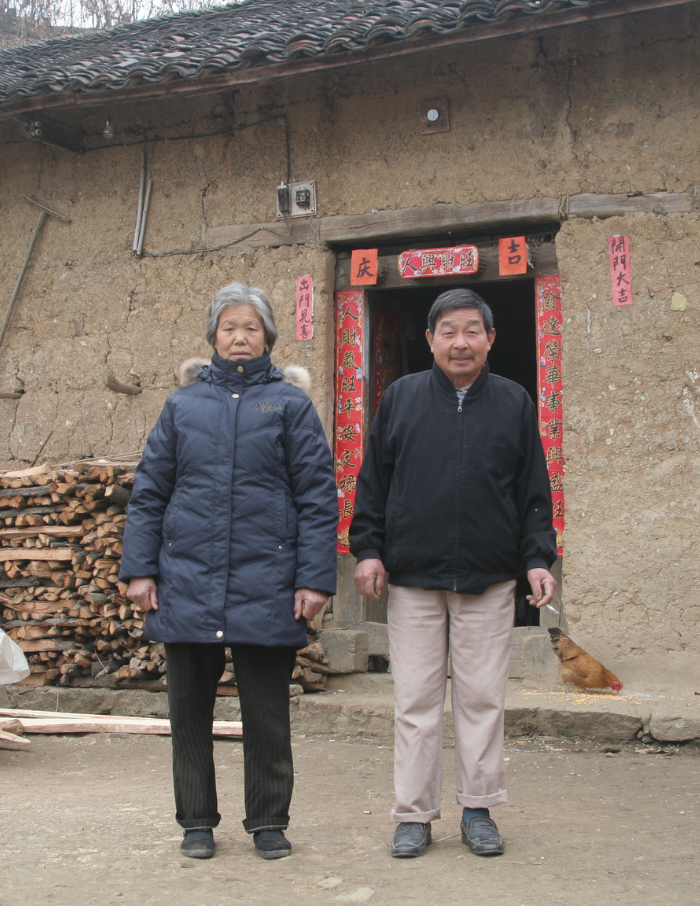
Throughout China’s history, countless individuals have made sacrifices for the “greater good.” This is the story of two of them. Displaced by a state water diversion project in their older years, will they be able to make new roots, or simply become cogs in a new machine?
"Last Harvest" follows the remarkable journey of Mr. and Mrs. Xu, an elderly farming couple on a relocation forced on them by China’s mammoth and highly controversial South-to-North Water Diversion project. Lyrical and intimate, this film brings us into the home and life of two compelling and hardworking peasants facing major disruption late in their lives. Through their experience, we see the imminent extinction of an Old China as a New China emerges.
The Xus live in Tutai, Hubei province, a small, idyllic and traditional farming village surrounded by mountains and streams. Although their families have been living there for generations, everything changes when people from the government’s Water Works Department arrive. The life of the Xu family is put on hold as they become aware that they are among the 800,000 people who will have to relocate thanks to a project that will take decades, divert several major rivers, and end up bringing 44.8 billion cubic metres of water to thirsty Northern China, particularly Beijing.
After years of preparation, the Xus leave their home in the darkness one morning, taken by bus to a townhouse complex hundreds of kilometers away. But will their new life be a better life? Will they eventually like it – or be able to afford it? What is to become of their life’s work so far? What is to become of them amid so much change?
"Last Harvest" offers a direct experience of the collision between traditional culture and modernization shared by millions of Chinese peasants, continuing the story – after the people have been relocated and have to re-build their lives.
Told from the unique perspective of its Chinese-Canadian filmmaker, (Jane) Hui Wang, "Last Harvest" makes an important contribution to our understanding of modern China – and the seismic physical, social and psychological changes going on there.
BACKGROUND
China’s South-to-North Water Diversion Project
More than half a century ago, on an inspection trip by the Yellow River, Chairman Mao Zedong said, "Southern water is plentiful, northern water scarce. If at all possible, borrowing some water would be good."
In the 1990s and after years of study, the Chinese government took on Mao’s idea, initiating a multi-decade infrastructure development, the controversial South-to-North Water Diversion (SNWD) project, changing the lives of 800,000 people forever.
The project has three main components:
- the Western route, diverting water from the Yangtze to the Yellow River.
- the Eastern route, along the path of the Grand Canal.
- the Central route, from the Danjiangkou Reservoir on the Han River (Yangtze’s largest tributary) to Beijing and other parts of Northern China, where water is expected to flow largely due to gravity.
Construction began in 2004 and was completed in 2014. The Central route project is the largest of the three, and the one that is affecting the Xu family.
The South-to-North Water Diversion project is expected to alleviate the dry rivers and low rainfall in heavily industrialized northern China. Opponents criticize it for a number of reasons, claiming the project is not worth the resources spent on it, that it will waste large amounts of water through pollution and evaporation, that it will increase the price of water for ordinary people and cause water shortages and transportation problems along the Yangtze, and that it will be environmentally harmful. As well, India and Bangladesh claim that 150 million people in those countries will suffer from low water levels when a river they depend on, the Bhramaputra, has water diverted away by the SNWD.
Director: Hui Wang
Producers: Jun Zhang, Hui Wang
DIRECTOR’S STATEMENT
My ultimate goal as a filmmaker is to develop a body of work exploring contemporary and historical topics/issues in China that have international relevance and relate to the general human experience from a unique Chinese-Canadian point of view.
"Last Harvest" is my first feature-length documentary, with which I hope to explore the following three main themes:
-How individuals face changes in life.
-The conflict between individuals and society.
-The conflict between traditional farming culture and modernization.
Throughout the course of history, countless individuals have made sacrifices for the “greater good.” Except for a few “heroes” and “antiheroes”, most of them have been ignored by history. By taking on this project and focusing the film on the lives of ordinary people caught in an extraordinary circumstance, represented by Mr. and Mrs. Xu, I am hoping to give them a voice so that more people in our society will become aware of the sacrifices they have made, which is part of the price we are paying for the so-called progress, and more importantly, start asking questions about the values we tend to take for granted in our modern society.
As a filmmaker, I feel that it is my responsibility to give a real sense of the Xus’ life as well as their loss and struggles. What I experienced during the making of "Last Harvest" has deeply affected me. On the one hand, the fact that the Xus have been bearing the whole thing patiently demonstrates their resilience. In the 21st century where personal, individual freedom and rights have never been more celebrated, the Xus have no options but to passively choose to accept a state act silently. However, they have stayed positive in the face of a new environment as they actively respond to changes in life. This attitude and strength demonstrated in times of difficulty have deeply moved me. On the other hand, the Xus’ frugal ways of living has made me reflect on our modern civilization. By 2011, China has become the biggest nation of money worshipers and the world’s second largest consumer of luxury goods. While most Chinese people are materialistic and only worried about their house not being big enough, their home decoration not luxury enough and their car not impressive enough, the Xus are contented living a very simple life. What modern civilization has given us is not too little of anything, but too much of everything.
By taking them on the journey with the Xus and showing them a different way of life that exists at the same time in the same world, I am hoping that this film will stimulate thoughts and conversations among the audiences, and encourage them to reflect on and have a better understanding of their own life.
Hui Wang
If your institution does not have a server or you are looking into a license for curated one-time events or fixed term exhibitions, please contact us.
Digital Site License (DSL) to Use Copyrighted Material - Terms of Use
The following terms are understood, accepted and effective upon payment of License Fee to Moving Images Distribution, the Licensor, and the buyer, the Licensee, named on the invoice. Copyrighted material, as identified on the invoice, hereinafter referred to as the Licensed Materials.
- License: The Licensor hereby grants to the Licensee, for the DSL term listed on the invoice, the educational use rights for digital streaming of the Licensed Materials within the Licensee’s private, closed system, password-protected platform. Licensee agrees not to sublicense, sublease, rent, resell, duplicate, digitize or transfer Licensed Materials to any other medium or format. Licensee shall not edit, cut or alter the Licensed Materials nor post it on publicly-accessible websites or networks. This license (i) will not be included in any courses that are sold to other institutions for distance-education purposes; (ii) is non-transferable; and (iii) is not assignable by the Licensee.
- Users: The Licensee agrees that the users for this license shall be restricted to the Licensee’s faculty, staff, students, and walk-in Library patrons.
- Expiration of Term: Upon expiration of the license term, the Licensee shall cease streaming of the Licensed Materials and the Licensed Materials must be inaccessible to Users after license term expiry or deleted from the Licensee’s digital, local, remote and cloud servers.
Acknowledgement of Copyright and Restricted Use: The Licensee acknowledges that the Licensed Materials are protected by copyright and that all intellectual property rights remain with the Licensor or the original rights holders. The Licensor retains a legally protected interest in the Licensed Materials, and the Licensee agrees not to use, copy, exhibit or otherwise exploit the Licensed Materials except as expressly permitted in the license agreement.
DVD w/PPR. PPR stands for Public Performance Rights. A DVD with PPR license permits the buyer to use the film in non-theatrical venues for educational purposes, community screenings and other non-commercial purposes. Standard educational DVD w/PPR purchases are in perpetuity for use by the institution, college, school, library, its staff and students.
All DVDs sales are final. We guarantee that all DVDs will be free from defects at the time of delivery. Defective DVDs will be replaced without charge within 30 days of date of shipment.
The creators of all works distributed by Moving Images Distribution hold copyright for their work. Copyrights are a form of intellectual property that gives the owner of the original work exclusive rights to that work, including its publication, distribution, adaptation and use. All purchasers are to specify use required precisely at time of ordering and agree to comply with all copyright, trademark and intellectual property law. No materials purchased may be used outside the rights acquired at time of purchase or may be reproduced in whole or in part by any method now known or hereafter devised. No materials purchased without specific broadcast license and agreement may be broadcast, retransmitted or exhibited in whole or in part without a specific license agreement from Moving Images Distribution for such use.